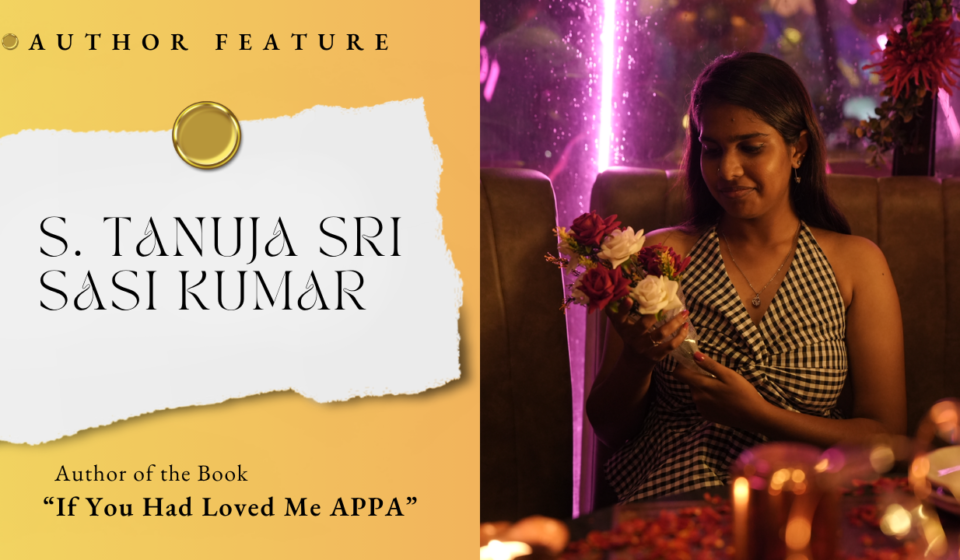

Writing What the Heart Could Never Say
For S. Tanuja Sri Sasi Kumar, writing has never been just a creative hobby—it has always been a quiet refuge. Long before stories reached readers, they existed as unspoken emotions, personal reflections, and thoughts that found their way onto paper when words could not be spoken aloud. Writing became the safest place to be honest, to heal, and to understand life one emotion at a time.
Rather than searching for extraordinary events, Tanuja finds inspiration in the ordinary experiences that shape every human being. She is deeply fascinated by emotions, relationships, and the invisible ways people are changed by love, loss, hope, and pain. These are the themes that quietly run through her work, allowing readers to connect not only with her characters but also with themselves.
Her debut psychological fiction novel, If You Had Loved Me, Appa, reflects this emotional depth. The story explores trauma, longing, heartbreak, and the universal desire to be loved—particularly by the people whose love matters the most. While the novel is fictional, its emotional landscape is deeply human, encouraging readers to reflect on the silent struggles many people carry throughout their lives.
Tanuja believes that stories do not always need to provide every answer. Instead, they should make readers feel. Whether it is joy, sadness, hope, reflection, or even silence, she hopes every page leaves behind an emotional imprint. For her, the greatest achievement is not simply finishing a story, but creating one that remains in a reader’s heart long after the final page has been turned.
Her writing is shaped by empathy rather than explanation. She is interested in the questions people hesitate to ask, the emotions they choose to hide, and the quiet battles that often remain unseen. Through fiction, she offers readers a space where those emotions can exist without judgment.
Above everything else, Tanuja carries a simple but powerful belief: life always moves forward. No matter how difficult yesterday may have been, every sunrise brings another opportunity to begin again. This optimism quietly defines both her outlook and her storytelling. Her work reminds readers to value the people they love, hold on to hope even in difficult moments, and trust that healing is always possible.
As she continues her writing journey, Tanuja remains committed to telling stories that are emotionally honest and deeply relatable. She does not write to impress or persuade. She writes to connect. Every story is an invitation to pause, reflect, and discover that even our deepest wounds can eventually become the beginning of something beautiful.
1. If You Had Loved Me, Appa explores deep emotional wounds. What inspired you to choose this theme for your debut novel?
Author: Many books explore broken relationships between couples—whether it’s love, marriage, or heartbreak. Those stories are important, but I noticed that very few people talk about broken relationships between a parent and a child, especially a father and daughter. Society often assumes that this bond is unbreakable and filled with unconditional love, but that isn’t everyone’s reality.
I wanted to bring attention to those silent emotional wounds that many people carry but rarely speak about. Through If You Had Loved Me APPA, I wanted readers who have experienced a complicated or broken parent-child relationship to feel seen, understood, and less alone. That emotional truth is what inspired me to write my debut novel.
2. The novel focuses heavily on emotions rather than action. Why was it important for you to tell the story in this way?
Author: For me, emotions are what stay with readers long after they finish a book. I wanted the story to feel real and deeply personal rather than simply entertaining. Instead of focusing on action, I chose to focus on emotions because they are something every human being can relate to, regardless of their background.
I also wanted the novel to connect from different perspectives. A daughter who has lost her father may see herself in the story, while a father who has lost his daughter may connect with it in a completely different way. More than anything, I wanted every reader to find a part of themselves in the book—something that reminds them of a relationship they cherish, miss, or wish had been different. If the story can make readers feel understood and emotionally connected, then I believe it has achieved its purpose.
3. The relationship between a parent and a child forms the emotional core of the book. What did you hope readers would understand about this bond?
Author: Many people see the bond between a father and daughter as something beautiful, unbreakable, and filled with unconditional love. It’s often described as one of the most special relationships in a person’s life, and for many people, it truly is.
However, I wanted readers to understand that this isn’t everyone’s reality. Not every parent-child relationship is warm or secure, and not every daughter grows up feeling like her father’s “little princess.” There are many people who carry emotional pain within their families while appearing perfectly happy on the outside.
Through this novel, I wanted to acknowledge those untold experiences. My hope is that readers recognize that every family has a different story, and that we should approach others with more empathy and understanding instead of assuming every relationship looks the same.
4. Your novel discusses trauma, longing, and healing. Which of these themes was the most challenging for you to write?
Author: The most challenging theme for me was longing. Writing about trauma and healing was emotional, but longing was different because it was about wanting something that never came. The protagonist isn’t grieving the loss of love she once had—she’s longing for a father’s love she never experienced.
Trying to imagine that kind of emptiness was incredibly difficult. I had to explore what it feels like to keep hoping for affection, acceptance, and love that never arrives. I wanted those emotions to feel honest and believable, so writing those scenes required a lot of emotional depth. It was the hardest part of the novel, but also one of the most meaningful.
5. The title itself is emotionally powerful. How did you arrive at the title If You Had Loved Me, Appa?
Author: The title came from the very heart of the story. If You Had Loved Me, Appa isn’t just a title—it expresses the protagonist’s deepest longing. More than anything else, all she ever wanted was her father’s love and acceptance.
As I was writing the novel, I kept asking myself, “What is the one emotion that defines this entire story?” The answer was that simple yet painful thought: If you had loved me… Those few words capture everything the protagonist feels—her unanswered questions, her pain, and the life she believes could have been different if she had received even the most basic love from her father.
That’s why I chose this title. It reflects the emotional core of the novel and prepares readers for the journey they’re about to experience.
6. Your characters experience emotions that many readers may relate to. How did you ensure these emotions felt genuine throughout the story?
Author: I wanted every emotion in the novel to have a purpose. It wasn’t enough for the characters to simply experience pain—I wanted them to grow through it. That’s why the emotional journey ultimately leads to acceptance. I believe that if a story only shows suffering without any emotional resolution, it can feel incomplete.
While writing, I focused on making the characters’ feelings honest and relatable. My hope was that readers wouldn’t just understand their emotions but would also see parts of themselves in them. Although the story centers on a broken father-daughter relationship, the message is much broader. It’s for anyone who has experienced a broken relationship, emotional pain, or loss.
By ending the story with acceptance and hope, I wanted readers to leave with a new perspective—that healing is possible, even after deep emotional wounds. I believe that is what keeps the emotions genuine throughout the novel.
7. Without revealing any spoilers, what do you hope readers will take away after finishing the novel?
Author: I hope readers finish the novel with a greater sense of empathy—both for themselves and for others. There are moments in life when we feel like we’re the only ones carrying pain and wonder, “Why is this happening only to me?” Those thoughts are more common than we realize.
Through this story, I want readers to understand that everyone is fighting battles we cannot always see. Some people carry incredibly deep emotional wounds behind a smile. I hope the novel reminds readers that they are not alone in their struggles and encourages them to look at others with more compassion and understanding.
Above all, I want readers to walk away with hope. No matter how painful life can become, healing, acceptance, and emotional strength are still possible. If the story helps even one person feel seen, understood, or a little less alone, then I believe it has fulfilled its purpose.
8. Your author bio mentions that writing became your way of expressing emotions. Did that personal approach influence the emotional tone of this novel?
Author: Yes, absolutely. Writing has always been the way I process and express emotions that are difficult to put into words. That personal connection naturally influenced the emotional tone of this novel. I didn’t want the emotions to feel exaggerated or dramatic—I wanted them to feel honest, raw, and human. My hope was that readers wouldn’t just read the story but truly feel what the characters were going through and connect with them on an emotional level.
9. Which scene in the book stayed with you the longest after you finished writing it, and why?
Author: The scene that stayed with me the longest is one where the protagonist reaches an emotional breaking point. Instead of holding everything inside, all of the pain, anger, and frustration finally come to the surface. Writing that moment was emotionally intense because it captures what happens when someone has been carrying unspoken feelings for far too long.
Even after I finished the novel, that scene continued to stay with me. Sometimes when I’m listening to music, it’s the first scene that comes back to my mind. I think it’s because it represents such a raw and honest human emotion. As a writer, it’s one of the scenes I feel most connected to, and it’s also one of my personal favorites in the book.
10. What message would you like readers to carry with them after closing the final page of If You Had Loved Me, Appa?
Author: I want readers to carry the message that every relationship, every emotion, and every moment in life matters. Sometimes we realize the value of something only after we lose it, and sometimes the words we never say become the biggest regrets we carry.
Through this novel, I want readers to understand the importance of expressing love, showing care, and valuing the people who are part of our lives while we still have the chance. At the same time, for those who have experienced pain or broken relationships, I want them to know that their story does not end there.
Life will always have moments of happiness and struggles, but what truly matters is how we choose to move forward. I hope readers close the book with a reminder to love more deeply, forgive when possible, and never take meaningful relationships for granted.