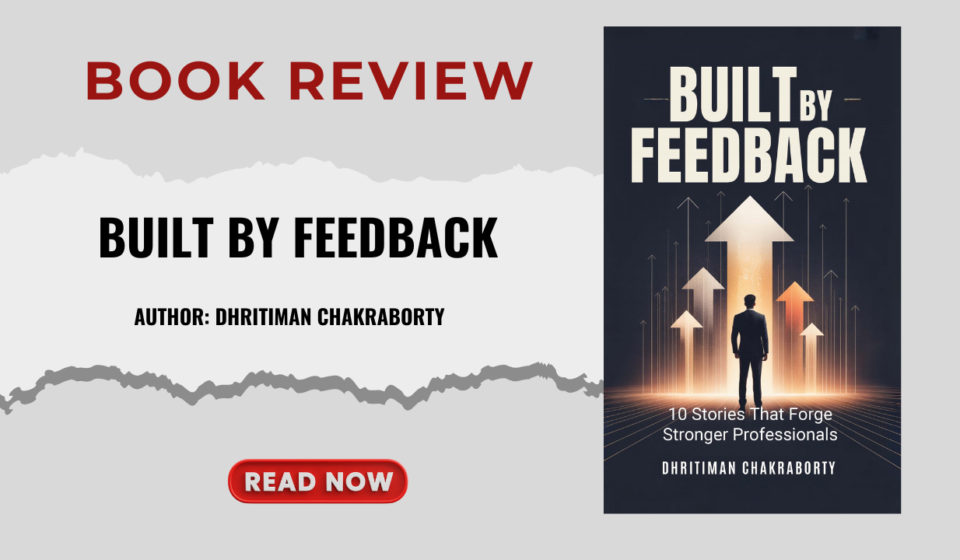

Dhritiman Chakraborty’s Built by Feedback could easily have been another addition to the crowded shelf of management self-help titles. Instead, it emerges as a thoughtful, introspective narrative that bridges psychology and practicality. Through ten stories grounded in real corporate experiences, the author reframes feedback—from a dreaded managerial ritual into an act of self-discovery.
The premise is deceptively simple: feedback, though uncomfortable, is the single most powerful force for professional and personal transformation. What makes this book stand out is its refusal to treat feedback as an HR function. Chakraborty writes about it as an emotional process—a dance between vulnerability and courage.
Each story is an intimate case study of that dance. The protagonists—drawn from diverse professional contexts—face moments that question their competence, identity, or worth. A shy accountant in Rajasthan learns to speak English publicly; a burnt-out banker finds art again; a laid-off employee rebuilds his life through entrepreneurship; a young manager learns to command a room with grace. The variety of stories ensures relatability across industries and age groups, yet they are united by a single motif: growth through discomfort.
Chakraborty’s signature frameworks—PUSH and GRAIN—anchor the narrative and provide practical scaffolding for introspection. The PUSH model helps readers understand their emotional response to criticism (Pressure, Uncomfortable Work, Support, Honest Feedback), while GRAIN offers a roadmap to rebuild (Gather, Reflect, Align, Implement, Navigate). What’s remarkable is how seamlessly these models are integrated into the stories. They never interrupt; they illuminate.
The book’s prose reflects its ethos—clear, empathetic, and deeply human. Chakraborty’s language is inclusive, deliberately avoiding jargon, making the book accessible to both corporate veterans and first-time readers. His voice carries authority without arrogance; he teaches by narrating, not by preaching. The tone is intimate, often conversational, making the reader feel spoken to, not instructed.
One of the most striking chapters, “When I Wasn’t Rewarded for Top Performance,” tackles an uncomfortable but universal workplace truth: that performance and reward do not always correlate. The author dissects this mismatch with nuance, acknowledging systemic issues while empowering readers to reclaim agency through communication, negotiation, and self-awareness. It’s this balance—between critique and compassion—that defines Chakraborty’s style.
Built by Feedback also excels in contextual authenticity. Unlike imported leadership playbooks, this book speaks directly to the Indian professional experience—where aspiration coexists with insecurity, where cultural deference often silences self-expression, and where growth often begins in uncomfortable silence. The inclusion of real corporate names, data, and relatable office dynamics gives the book credibility and immediacy.
If there is a critique to be made, it’s that the book occasionally leans toward optimism. Every story ends with resolution—sometimes too tidy for real-world chaos. Yet, one senses this is a deliberate choice. Chakraborty is less interested in depicting despair than in demonstrating the mechanics of resilience. His goal is not to diagnose dysfunction but to awaken courage.
In essence, Built by Feedback offers a new vocabulary for professional growth. It asks readers to reimagine feedback not as a threat to self-worth but as an instrument of self-awareness. Its message resonates across roles and industries: that we are not built by praise or promotions, but by the difficult truths we dare to face and the courage we summon to act on them.
In an age where validation is instant and attention spans are short, Dhritiman Chakraborty’s book reminds us that true growth is slow, deliberate, and often uncomfortable. Built by Feedback isn’t just a management guide—it’s a philosophy for anyone who wants to lead, learn, and live with more honesty.
Title: Built By Feedback
Author: Dhritiman Chakraborty
Publisher: Evincepub Publishing
Buy book on Amazon