
Independent Review 5 • 1,375 words
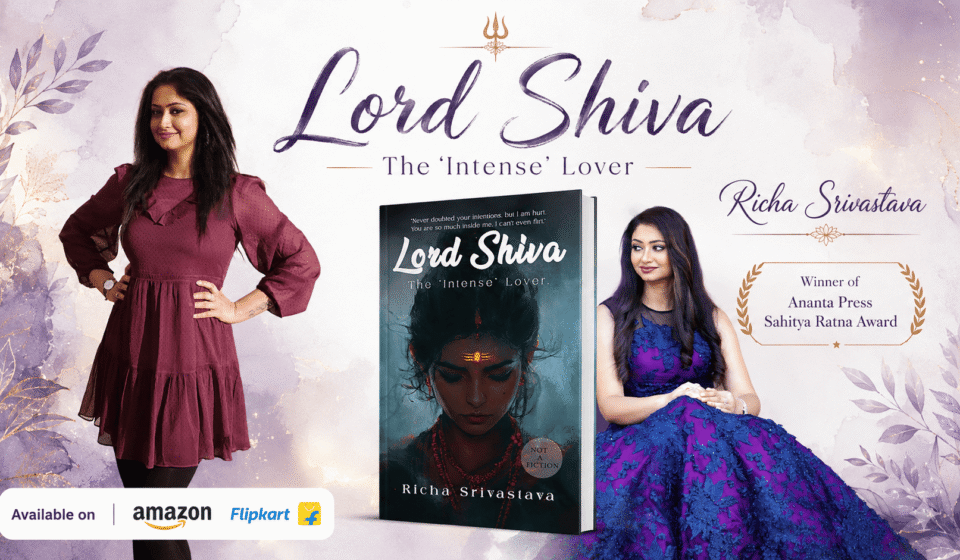
In a crowded field of books about spirituality, mythology, and personal growth, Lord Shiva – The “Intense” Lover by Richa Srivastava distinguishes itself through one decisive choice: it tells the story from inside the author’s own life. The book is described as an autobiography built around supernatural experiences and real incidents. This means its central material is not a retelling of familiar legends or a general explanation of Shiva worship. It is a personal record of what the author experienced, how she interpreted it, and why those experiences became inseparable from her understanding of Lord Shiva.
That personal foundation gives the book authenticity. Readers may hold different beliefs about the supernatural, yet they can still respond to the honesty of someone describing events that changed her. Memoir does not ask every reader to reach the same conclusion. It asks the reader to witness another person’s truth with attention. Srivastava’s book appears to create precisely this kind of encounter.
The title is perhaps the work’s most immediate statement of originality. Lord Shiva is widely portrayed as Mahadev, the destroyer, the yogi, the compassionate protector, and the cosmic dancer. “The Intense Lover” is a less conventional phrase. It shifts the focus from grand mythology to intimate experience. It implies that the author’s bond with Shiva is emotional, direct, and deeply personal. This unusual framing makes the book memorable even before the first chapter begins.
The idea of divine love as intensity is also philosophically appropriate. Shiva represents transformation, and transformation can be painful. To love a force of truth and renewal may mean allowing false identities, attachments, and expectations to be destroyed. The author’s admission that she can trust divine intention while still feeling hurt captures this paradox. Spiritual maturity does not necessarily eliminate pain. It may instead create a way to live through pain without losing meaning.
This emotional complexity is one of the book’s greatest strengths. Inspirational books sometimes simplify suffering into neat lessons. Real life rarely works that way. An autobiography based on actual incidents can preserve ambiguity. The author may recognise meaning only after time has passed. Some experiences may remain mysterious. By allowing uncertainty to remain part of the story, the book can feel more human.
The supernatural experiences contribute mystery, but they also create a larger conversation about perception. People interpret reality through culture, faith, memory, and emotional need. An event that seems ordinary to one person may feel spiritually charged to another. The memoir’s value lies in showing how the author’s perception developed. Readers are invited to examine not only what happened, but how meaning was formed.
Richa Srivastava’s background makes this exploration especially interesting. She is described as a professional with experience in intellectual property and content, an entrepreneur who has built startups, a counsellor, motivational speaker, and author. She has also participated in a beauty pageant and received a range of awards in business, leadership, literature, and motivational speaking. This combination of analytical, entrepreneurial, creative, and public-facing roles gives her spiritual narrative a distinctive voice.
A reader may reasonably assume that someone with such a background is accustomed to planning, evidence, communication, and measurable outcomes. Supernatural experience, however, belongs to a different realm. It cannot always be organised or verified in conventional ways. The book’s tension between a structured professional life and an unstructured spiritual mystery is therefore compelling. It reflects a conflict many modern readers understand: the mind seeks explanation, while the heart recognises significance.
The author’s work in counselling and motivation may also help her translate personal experience into reader value. A memoir becomes more than a diary when it enables others to recognise themselves. The exact events may be unique to Srivastava, but the emotions surrounding them—hope, doubt, grief, longing, trust, and the need for reassurance—are widely shared. This emotional universality allows the book to reach beyond readers who already worship Shiva.
For devotees, the book may deepen the sense of Shiva as a living presence. For general readers, it may provide insight into how devotion shapes a person’s decisions and resilience. For those interested in unexplained phenomena, it offers a personal account rooted in real incidents. For readers of women’s life writing, it presents a contemporary Indian woman whose spiritual identity exists alongside professional ambition and public achievement.
The book also contributes to a broader shift in modern spiritual literature. Readers increasingly seek first-person narratives rather than only abstract teachings. They want to know how belief operates during actual crises, relationships, and turning points. Srivastava’s autobiography responds to this interest. It brings spirituality down from the level of doctrine and places it within memory, emotion, and daily life.
Another reason the book stands out is its refusal to make the author’s public success the only story. Lists of awards and achievements can create an image of confidence and control, but autobiography reveals the private dimensions that achievements cannot show. A person may receive honours and still struggle with unanswered questions. She may inspire others and still need inspiration herself. This contrast gives the memoir depth.
The book’s relationship with Lord Shiva can also be read as a relationship with the author’s highest understanding of strength. Shiva is not strength in the ordinary sense of domination. He represents the strength to remain still, to destroy illusion, to accept impermanence, and to begin again. These qualities are deeply relevant to personal development. Through the author’s experiences, Shiva becomes not only a deity but also a framework for interpreting resilience.
The phrase “not a fiction,” prominently associated with the book, establishes a reading contract. The author wants the audience to understand that the emotional and supernatural material is presented as lived experience. This claim increases the intensity of the narrative. At the same time, thoughtful readers should approach any autobiography with awareness that memory is personal and interpretation is subjective. That does not reduce the work’s value. On the contrary, it highlights the central purpose of memoir: to reveal how a life is understood from within.
The literary appeal of the book therefore lies less in conventional plot and more in voice, confession, and reflection. The reader follows an inner movement from experience to meaning. This form can be especially powerful when the author writes with emotional openness. Moments of fear or pain become significant not because they are dramatic, but because they expose vulnerability.
The book may encourage readers to reconsider their own unexplained moments. Many people have experienced coincidences, dreams, intuitions, or unexpected events that felt meaningful. They may not label them supernatural, yet they remember them because those moments arrived at a crucial time. A memoir like this gives permission to examine such experiences without embarrassment. It suggests that mystery can be part of a serious life.
At the same time, the work’s best contribution is not a demand for belief. Its deeper invitation is to remain open—to the possibility that life contains meanings we do not immediately recognise, that pain can become a source of transformation, and that devotion can take highly personal forms. This openness is relevant even to readers outside a religious framework.
Lord Shiva – The “Intense” Lover is unique because it brings together four powerful elements: the intimacy of autobiography, the mystery of supernatural experience, the emotional force of devotion, and the confidence of a modern female voice. Each element strengthens the others. The autobiography prevents the spirituality from becoming generic. The supernatural experiences create curiosity. The devotion gives the incidents a unifying meaning. The author’s contemporary life makes the narrative relatable.
Ultimately, the book can be appreciated as a testimony of transformation. It portrays Lord Shiva not as a distant figure confined to ancient stories, but as a presence the author believes has entered her personal journey. Whether the reader interprets that presence literally, symbolically, or psychologically, the emotional impact remains. The work asks an enduring question: what happens when a person begins to see the divine not outside life, but within its most painful and mysterious events?
For readers seeking an unconventional spiritual memoir, a woman-centred autobiographical narrative, or a reflective account of real incidents and supernatural experiences, Lord Shiva – The “Intense” Lover offers a distinctive and thought-provoking reading experience. Its sincerity, courage, and unusual portrayal of divine love make it stand apart in contemporary non-fiction.
Amazon Link: https://amzn.in/d/0dpvsP2g