The Rolling Stone That Gathered Moss: Finding Roots, Responsibility, and Meaning in a Changing World

Book Review
There is something immediately intriguing about a title that challenges a familiar proverb. The Rolling Stone That Gathered Moss, written by Arv, takes an expression traditionally associated with instability and transforms it into an invitation to reconsider the relationship between movement and belonging. Rather than presenting growth and rootedness as conflicting forces, the title opens the possibility that life’s greatest transformations may come from learning how to remain connected while everything around us changes.
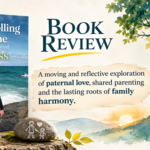
At the heart of the book is a deeply human subject: the emotional experience of fatherhood. Arv gives attention to the protective, enduring, and frequently unspoken love that fathers carry for their children. The work’s stated purpose is to provide a voice for fathers while recognizing the essential partnership between mothers and fathers in creating a nurturing environment for the next generation.
This combination of personal reflection and family philosophy makes the book’s premise particularly relevant to modern life.
Contemporary society often associates achievement with continuous movement. Individuals are encouraged to pursue opportunities, reinvent themselves, expand their ambitions, and measure success through visible accomplishments. Stability, meanwhile, can sometimes be mistaken for stagnation.
The title challenges this assumption.
A rolling stone suggests a life defined by motion. Moss suggests the gradual accumulation of connection, memory, and belonging. The coexistence of these two images raises an interesting question: can a person continue evolving while also developing deep roots?
The experience of parenthood offers one possible answer.
Becoming responsible for a child can alter the meaning of independence. Decisions that once affected only one individual begin to carry consequences for an entire family. Time acquires new significance. Priorities shift. Ordinary choices become part of a broader commitment to another person’s future.
Yet this transition need not represent the abandonment of personal identity. Instead, responsibility can become an opportunity for self-discovery.
A father who begins to understand patience through his child’s needs, vulnerability through his concern for the family, or perseverance through daily responsibilities may find that parenthood has expanded his understanding of himself.
The strength of Arv’s central theme lies in its recognition of this quieter form of transformation.
Personal growth does not always arrive through dramatic experiences or extraordinary achievements. Sometimes it develops through repeated actions that seem unremarkable at the time. Making oneself available, maintaining promises, overcoming exhaustion, and returning to responsibilities with renewed determination can all contribute to emotional maturity.
These changes may be difficult to observe from the outside, but they can have lasting significance within a family.
The book’s emphasis on fathers adds another important dimension. In many social settings, men are encouraged to demonstrate their value through accomplishment, control, and self-sufficiency. Emotional needs may receive less attention, particularly when men become responsible for others.
Fatherhood can intensify these expectations. The responsibility to protect may gradually become an assumption that a father must never show uncertainty. Providing stability may be confused with concealing fear. Strength may be interpreted as silence.
Arv’s focus on the profound love fathers carry invites readers to reconsider these expectations.
A father’s emotional world can include tenderness, anxiety, hope, pride, disappointment, and an intense desire to provide his child with opportunities. Recognizing these feelings does not diminish the protective role of fatherhood. It makes that role more understandable.
This recognition matters because families are shaped not only by what their members do but also by how their experiences are acknowledged.
When love remains invisible, even sincere dedication can become difficult to appreciate. A child may see rules without understanding the concern behind them. A partner may observe long working hours without recognizing the emotional pressure accompanying them. A father may struggle to express affection because he has never been encouraged to do so.
These possibilities highlight why the book’s emphasis on giving fathers a voice is meaningful.
Communication becomes a bridge between internal intention and external understanding.
The work’s second major theme, the importance of mothers and fathers remaining rooted together, reinforces this idea. Relationships require more than individual commitment. They require shared understanding.
The description’s comparison of two parents to hands folding into prayer or forming a warm embrace is particularly effective as a symbol. Prayer suggests faith, humility, and hope. An embrace suggests comfort, acceptance, and protection. In both images, the joining of two hands creates a meaning that neither hand can express in quite the same way alone.
Within family life, the metaphor emphasizes the importance of partnership.
Parents may bring different experiences, perspectives, emotional tendencies, and practical abilities to their responsibilities. These differences can enrich a child’s upbringing when accompanied by mutual respect. Difficulties arise when differences are treated as evidence of superiority rather than opportunities for cooperation.
The concept of staying rooted together therefore carries emotional and practical implications.
It suggests that relationships must be maintained through changes in circumstance. Parenting a young child, supporting a teenager, and adjusting to an adult child’s independence can each introduce new challenges. Financial pressure, professional demands, illness, relocation, and changing aspirations may also influence family dynamics.
Remaining rooted does not mean avoiding these changes. It means attempting to preserve trust and connection while responding to them.
This is an especially useful distinction for readers living in a rapidly changing world. Stability is not necessarily the absence of uncertainty. It can be the presence of relationships that provide reassurance amid uncertainty.
The title also encourages consideration of what individuals ultimately leave behind.
Material accomplishments may be visible and measurable, but emotional influence is often subtler. The confidence a child develops through encouragement, the sense of safety created by dependable care, and the values learned through daily observation may endure long after specific family experiences are forgotten.
A father’s legacy, viewed through this lens, consists not only of what he provides but also of how his presence influences another person’s understanding of love and responsibility.
The book’s ideas are particularly suited to reflective readers. It offers a foundation for thinking about family history, personal priorities, and the relationship between sacrifice and fulfillment.
Its central message may also encourage adults to revisit their childhood perceptions. Behaviors once interpreted only as strictness, silence, or distance may deserve a more nuanced examination. Such reflection does not require excusing every parental mistake. Rather, it allows readers to recognize that family relationships can contain both genuine affection and imperfect communication.
This balance is essential. Acknowledging the significance of fatherhood should not mean romanticizing sacrifice or assuming that responsibility alone guarantees emotional closeness. Love benefits from communication, respect, and accountability.
The most constructive reading of Arv’s message recognizes that being rooted together is an active process. It requires listening, adapting, expressing care, and making room for individual growth.
Ultimately, The Rolling Stone That Gathered Moss invites readers to redefine the meaning of a settled life. The book’s premise suggests that roots are not simply something we inherit or discover in a fixed location. They can emerge through relationships, commitments, and shared experiences.
The rolling stone, then, becomes more than a symbol of movement. It becomes a reminder that a life in motion can still gather meaning, attachment, and emotional depth.
Arv’s reflection on fatherhood gives this metaphor a distinctly personal significance. Through the idea of enduring paternal love and cooperative parenting, the book celebrates the possibility of growing without becoming disconnected.
Its most lasting message is that maturity does not always mean moving farther away. Sometimes, it means learning what is worth remaining close to.
Amazon Link – https://www.amazon.in/Rolling-Stone-That-Gathered-Moss/dp/9379001541/