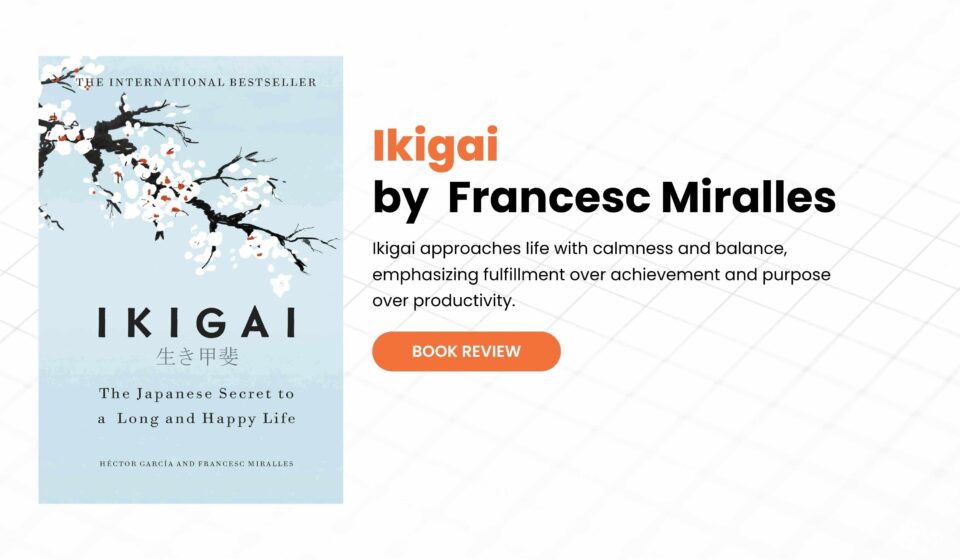
Ikigai: The Japanese Secret to a Long and Happy Life is a gentle and reflective exploration of what gives human life meaning, purpose, and longevity

Ikigai: The Japanese Secret to a Long and Happy Life is a gentle and reflective exploration of what gives human life meaning, purpose, and longevity. Written by Héctor García and Francesc Miralles, the book draws inspiration from Japanese philosophy, particularly the concept of ikigai — the reason one wakes up each morning. Unlike many modern self-help books that focus solely on ambition or success, Ikigai approaches life with calmness and balance, emphasizing fulfillment over achievement and purpose over productivity.
What makes the book deeply appealing is its simplicity. Through stories of Japanese centenarians, especially from the village of Okinawa, the authors explore how happiness is often hidden in ordinary routines, meaningful relationships, mindful living, and small daily joys. The book suggests that a long and meaningful life is not built on wealth or constant hustle, but on finding harmony between passion, work, contribution, and personal satisfaction. In a fast-moving world obsessed with urgency, Ikigai feels almost meditative, encouraging readers to slow down and reconnect with themselves.
One of the book’s most powerful ideas is that purpose does not have to be grand or extraordinary. Many people spend their lives searching for a dramatic calling, believing purpose must arrive as a singular revelation. Ikigai quietly challenges this belief by showing that meaning can exist in simple acts — caring for family, practicing a craft, helping others, creating art, or simply appreciating everyday life. This philosophy makes the book emotionally comforting because it removes the pressure of perfection and instead celebrates consistency, presence, and authenticity.
The authors also discuss lifestyle habits associated with longevity, such as healthy eating, movement, social connection, and mental resilience. However, these lessons never feel overly scientific or rigid. Instead, they are woven into a broader philosophy of living gently and intentionally. The emphasis on community and emotional connection is particularly striking, reminding readers that happiness is deeply tied to belonging and shared human experiences. In many ways, the book feels less like a manual and more like a conversation about how modern life has distanced people from simplicity and inner peace.
What truly makes Ikigai resonate is its emotional atmosphere. The writing carries a sense of calm wisdom, encouraging readers not to chase life endlessly but to inhabit it fully. It asks profound questions without sounding forceful: What makes life worth living? What gives us joy beyond success? How can we create a life that feels meaningful even in ordinary moments? These reflections linger long after the final page because they touch something deeply universal — the human desire to feel purposeful and connected.
Ultimately, Ikigai is not just about longevity; it is about learning how to live with intention and gratitude. It reminds readers that happiness is rarely found in dramatic milestones, but often in the quiet rituals of everyday existence. The book’s greatest strength lies in its ability to make readers pause and reconsider what truly matters. In the end, Ikigai offers a timeless message: a meaningful life is not measured by how fast we move or how much we achieve, but by whether we wake up each day with a reason to keep going.