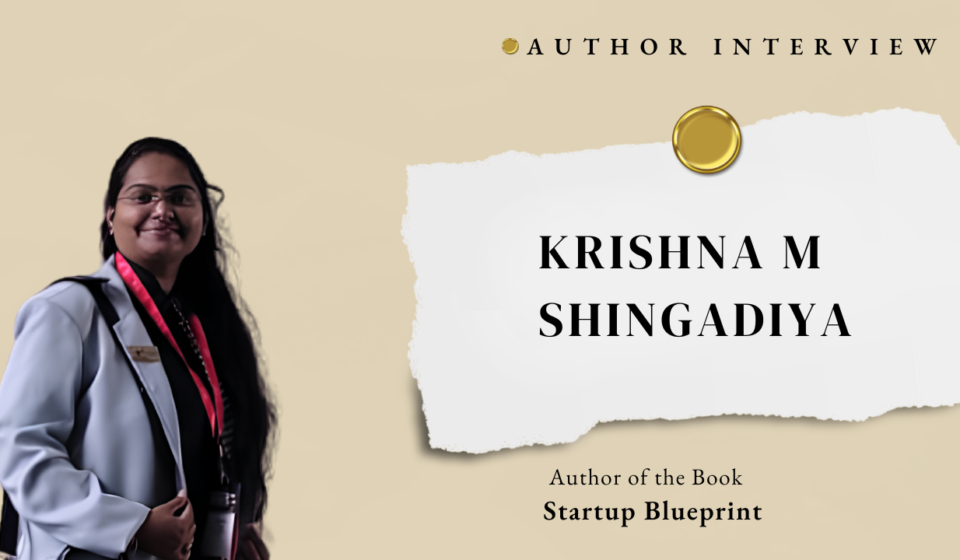

Krishna M. Shingadiya is an accomplished Marketing Strategist, Strategic Business Consultant, Author, and Corporate Trainer dedicated to transforming entrepreneurs, startups, and MSMEs into sustainable, growth-driven organizations.
With extensive consulting experience across diverse industries, she has worked with business owners to improve marketing strategies, sales systems, business processes, digital transformation, leadership development, and organizational growth. Her expertise combines practical business consulting with modern digital marketing, enabling businesses to scale in today’s competitive marketplace.
Krishna is also an experienced *Digital Marketing and Soft Skills Trainer*, having conducted virtual and offline training programs for entrepreneurs, business owners, professionals, and aspiring marketers. Her training philosophy focuses on practical implementation, strategic thinking, and measurable business results rather than theory alone.
As the founder of *Krishna Digital Marketing Academy*, she is committed to making business education accessible through online learning, social media, workshops, and digital content. Her mission is to equip entrepreneurs with the knowledge, skills, and strategic mindset required to build successful and future-ready businesses.
Krishna is the author of three business-focused books designed to empower the next generation of entrepreneurs and business leaders:
MBA to CEO explores the journey from academic knowledge to executive leadership, providing practical insights on leadership, business strategy, decision-making, and organizational success.
The Skill Revolution highlights the essential future skills required in the age of Artificial Intelligence, digital transformation, automation, and continuous innovation, helping professionals remain competitive in an evolving global economy.
The Startup Blueprint serves as a practical roadmap for entrepreneurs, covering every stage of building a successful startup—from idea validation and business planning to marketing, scaling, fundraising, and long-term growth.
Through her writing, consulting, and training, Krishna aims to bridge the gap between business theory and real-world execution. Her work inspires entrepreneurs to build resilient businesses, embrace innovation, and create lasting impact in their industries.
Professional Expertise
* Strategic Business Consulting for MSMEs & Startups
* Marketing Strategy & Business Growth
* Digital Marketing & Personal Branding
* Sales System Development & Customer Acquisition
* Startup Mentoring & Business Scaling
* Leadership Development & Soft Skills Training
* Business Process Improvement & Organizational Growth
* Corporate Workshops & Executive Coaching
Mission
“To empower entrepreneurs, startups, and MSMEs with practical strategies, future-ready skills, and transformational business knowledge that creates sustainable growth and lasting success.”
1. Your book repeatedly emphasizes that startups are built by solving real problems, not by chasing unique ideas. At what point did you realize that identifying the right problem is more valuable than inventing the next “big idea”?
Author: One of the greatest misconceptions in entrepreneurship is that success begins with a revolutionary idea. Early in my entrepreneurial journey, I also believed that innovation meant creating something completely new. However, years of working with businesses, startups, and entrepreneurs taught me a very different lesson: the market rarely rewards originality alone—it rewards relevance.
Every successful business exists because it solves a problem that people are willing to pay to solve. Customers rarely wake up searching for innovative ideas; they wake up looking for solutions to frustrations, inefficiencies, unmet needs, or aspirations. Once I understood this, my perspective on entrepreneurship changed completely.
Some of the world’s most successful companies were not the first to enter their industries. What distinguished them was their ability to understand customers more deeply and execute solutions more effectively. Innovation is often about improving an existing experience rather than inventing an entirely new category.
I encourage aspiring founders to spend less time asking, “What business should I start?” and more time asking, “What problems do people repeatedly face, and why haven’t they been solved well?” Every complaint is a potential business opportunity. Every inefficiency is an invitation to innovate.
Great entrepreneurs don’t chase ideas—they chase understanding. Once you understand people deeply enough, valuable ideas emerge naturally.
2. You introduce the F.O.U.N.D.E.R. Framework™ and explain that a startup’s greatest asset is its founder. Which quality in this framework do you believe first-time entrepreneurs underestimate the most, and why?
Author: Among all the qualities within the F.O.U.N.D.E.R. Framework™, the one most consistently underestimated is resilience. Many first-time entrepreneurs believe that success depends primarily on intelligence, funding, or technical expertise. While those factors certainly matter, they rarely determine who survives the entrepreneurial journey.
Building a business is not a linear process. Every founder encounters uncertainty, rejection, financial pressure, changing markets, and moments of self-doubt. The difference between those who succeed and those who give up is often not the quality of their idea, but the strength of their mindset.
Resilience is the ability to learn without losing confidence, adapt without losing direction, and continue moving forward despite temporary setbacks. It transforms failures into feedback and obstacles into opportunities for innovation.
I also believe resilience must be balanced with reflection. Persistence should never become stubbornness. Great founders remain committed to their mission while staying flexible about their methods. They pivot when customer feedback demands it, refine their strategy when markets change, and continue learning throughout the journey.
Ultimately, a startup grows only as much as its founder grows. A resilient founder builds a resilient company.
3. Many aspiring founders spend months perfecting their business plans but hesitate to take the first step. What advice would you give someone who is waiting for the “perfect time” to launch?
Author: The perfect time to start a business is a myth. Markets change, technologies evolve, competitors emerge, and customer expectations shift constantly. If we wait for certainty before taking action, we often end up watching someone else execute the very idea we were planning.
Planning is important because it reduces avoidable mistakes. However, planning should never become a substitute for execution. A business plan is based on assumptions, while a real business is built on evidence. That evidence comes only after customers interact with your product or service.
Instead of trying to build a perfect business, focus on building a learning business. Launch a minimum viable product. Speak directly with customers. Test your assumptions. Gather feedback. Improve continuously.
Entrepreneurship is not about predicting the future with precision. It is about developing the ability to respond intelligently as the future unfolds.
The marketplace rewards action. Progress always belongs to those who begin before they feel completely ready.
4. One of the strongest messages in your book is that execution matters more than ideas. Can you share how entrepreneurs can build the discipline to consistently execute rather than constantly planning?
Author: Execution is not a personality trait—it is a habit. Successful entrepreneurs are not necessarily more motivated than others; they have simply built systems that convert intention into consistent action.
One principle I strongly believe in is breaking large ambitions into small, measurable commitments. Instead of focusing on building a billion-dollar company, focus on today’s customer conversation, today’s product improvement, today’s marketing campaign, or today’s learning objective.
Momentum is created through consistency, not intensity.
Another important practice is accountability. Entrepreneurs should regularly measure progress using meaningful indicators rather than emotions. Decisions should be driven by customer feedback, business metrics, and measurable outcomes instead of assumptions.
Execution also requires accepting imperfection. Many founders delay action because they fear making mistakes. Yet mistakes are not the opposite of progress—they are part of progress. Every experiment generates insight. Every customer interaction teaches something that planning alone never could.
Ultimately, ideas inspire businesses, but execution builds them. The marketplace never rewards intentions; it rewards implementation.
5. You challenge several popular startup myths, including the belief that success depends on heavy funding. In today’s startup ecosystem, what do you think investors really look for beyond capital requirements?
Author: Funding is often viewed as the starting point of success, but experienced investors understand that capital alone cannot compensate for a weak business model or poor leadership.
Before investing in a product, investors invest in people. They evaluate the founder’s character, adaptability, decision-making ability, resilience, and commitment. They ask whether this entrepreneur can navigate uncertainty when conditions inevitably change.
They also look for evidence rather than promises. Customer validation, market demand, sustainable unit economics, product-market fit, and a clear understanding of the target audience carry far greater weight than ambitious projections alone.
Equally important is the founder’s ability to learn. Markets evolve rapidly, and no original business plan survives unchanged. Investors seek entrepreneurs who listen to customers, embrace feedback, and adjust strategy without losing sight of their long-term vision.
Ultimately, funding accelerates momentum that already exists. It rarely creates momentum where none exists. Strong businesses attract investment because they demonstrate value, not because they simply ask for capital.
6. Your book encourages entrepreneurs to validate demand before building a product. Why do so many startups fall in love with their idea instead of listening to their customers?
Author: Entrepreneurs naturally become emotionally attached to their ideas because those ideas represent months—or sometimes years—of effort, imagination, and personal ambition. However, customers are not emotionally invested in our ideas. They are invested only in whether our solution improves their lives.
This difference creates one of the biggest risks in entrepreneurship.
Many founders spend months perfecting features, branding, or technology before having meaningful conversations with potential customers. As a result, they optimize solutions for problems that may not actually exist.
Customer validation requires humility. It means accepting that the market may know more than we do. Instead of asking customers to admire our product, we should ask them to explain their frustrations, priorities, and decision-making process.
I often remind entrepreneurs that feedback is not criticism—it is market intelligence. Every conversation with a customer reduces uncertainty and increases the probability of building something people genuinely need.
The businesses that succeed are not those with the strongest attachment to an idea, but those with the strongest commitment to solving a real problem
7. Artificial Intelligence is presented as a growth partner rather than a threat. How do you see AI transforming the way startups innovate, market, and scale over the next decade?
Author: Artificial Intelligence represents one of the most significant shifts in entrepreneurial history. For startups, it creates opportunities that were once available only to large organizations with substantial resources.
AI allows founders to research markets faster, analyze customer behavior more accurately, create personalized marketing campaigns, automate repetitive operations, improve customer support, accelerate product development, and make more informed decisions based on data rather than intuition alone.
However, the greatest opportunity lies not in automation but in amplification. AI enables entrepreneurs to focus less on routine execution and more on creativity, strategy, innovation, and relationship building.
At the same time, I believe startups must use AI responsibly. Technology should support human judgment, not replace it. Decisions involving ethics, trust, leadership, and customer relationships will always require human wisdom.
Over the next decade, the most successful startups will not simply use AI—they will combine artificial intelligence with authentic human insight. That combination will become a powerful competitive advantage.
8. The book blends strategy with practical worksheets, scorecards, and action plans. Why was it important for you to make this a hands-on guide instead of just another book on entrepreneurship?
Author: Entrepreneurship is learned through action, not information alone. There are already countless books that explain business concepts beautifully, yet many readers finish them feeling inspired but uncertain about what to do next.
I wanted this book to close the gap between learning and implementation.
The worksheets, scorecards, frameworks, and action plans were designed to transform readers from passive consumers of knowledge into active builders of businesses. Every exercise encourages reflection, decision-making, validation, and measurable progress.
Knowledge becomes valuable only when it changes behavior. A concept that remains inside a notebook has limited impact, but a concept that shapes a business decision can transform an entrepreneur’s future.
My goal was not simply to write a book that readers enjoy. My goal was to create a practical companion that entrepreneurs return to repeatedly while building their ventures.
I believe the best business books do more than educate—they create action.
9. Throughout the book, you stress that entrepreneurship is as much about mindset as it is about business. Which personal habit or mindset shift has had the greatest impact on your own entrepreneurial journey?
Author: The single most transformative mindset in my entrepreneurial journey has been taking complete ownership.
Entrepreneurship teaches us that circumstances may influence outcomes, but responsibility always remains with the founder. Instead of asking why something went wrong, I learned to ask what I could improve, what I had overlooked, and what lesson the experience was offering.
This mindset eliminates blame and creates growth.
Alongside ownership, continuous learning has become a daily habit. Every customer interaction, business challenge, success, and failure contains valuable information. The entrepreneurs who remain curious continue evolving long after others become comfortable.
I also learned to separate temporary setbacks from long-term vision. Businesses experience fluctuations, but purpose provides stability. When the mission remains clear, obstacles become part of the journey rather than reasons to abandon it.
Ultimately, entrepreneurship is not merely the process of building a company—it is the process of building the person capable of leading that company.
10. If a young entrepreneur finishes reading Startup Blueprint today and can remember only one lesson from the entire book, what do you hope that lesson will be?
Author: If readers remember only one lesson, I hope it is this:
Never build a business simply to sell a product. Build a business to solve a meaningful problem so effectively that customers willingly become your strongest advocates.
Ideas may inspire businesses, but value sustains them.
Technology will evolve.
Markets will change.
Competition will increase.
Economic conditions will fluctuate.
But organizations that consistently create genuine value will continue to grow because they earn something more important than revenue—they earn trust.
Entrepreneurship is not a destination or a title. It is a lifelong commitment to learning, adapting, serving others, and creating positive impact.
That is the philosophy behind Startup Blueprint. My hope is that readers finish the book not merely believing they can start a business, but understanding that they have the ability to solve problems, create opportunities, and build something that improves the lives of others.
When entrepreneurs focus on value before valuation, contribution before recognition, and execution before perfection, success becomes not an accident but a natural outcome of the process.
Title: Startup Blueprint
Author: Krishna M Shingadiya
Publisher: Evincepub Publishing