
By Dr. Abha Mishra
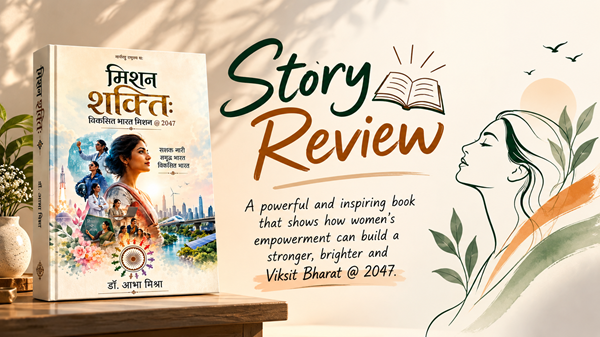
Imagine a village where a woman wakes up early every morning. She takes care of her family, manages the home, helps in farming, saves water, looks after children and sometimes also earns money. She works for many hours, but much of her work is never counted as part of the economy. Now imagine millions of women doing the same thing across India. This simple picture explains one of the main ideas behind Naryastu Rashtrasya Shva – Mission Shakti: Viksit Bharat Mission @2047 by Dr. Abha Mishra.
The book asks an important question: Can India become a developed country if women do not get equal chances to use their abilities?
The answer becomes clear as we move through the ideas of the book. Women are not only members of a family. They are students, workers, farmers, teachers, business owners, professionals, thinkers and decision-makers. When women get better opportunities, their progress also helps their families and society. This is why the book connects women’s empowerment with India’s development journey towards 2047. One part that I found very useful is the discussion about money and banking. A woman having her own bank account may look like a small thing, but it can create a big change. She can save money, use digital payments, take financial decisions and even think about starting her own work. The book discusses programs such as PMJDY and MUDRA to explain how financial inclusion can help women become more independent.
Another interesting part is about unpaid work. A woman may spend hours cooking, cleaning and caring for her family. She may not receive a salary for this work, but her contribution is still valuable. The book makes us notice this hidden work and understand how much time and effort women give to their families. The book also talks about women and the environment. In many villages, women work closely with land, water and natural resources. Their experience can be very useful in protecting the environment and finding better ways to deal with climate problems. I also liked how the book connects modern economic thinzing with India’s history and culture. It shows that women’s contribution to society and knowledge has deep roots. Gender budgeting is another important idea. In very simple words, it means that while making budgets and policies, we should also think about how government decisions affect women. Good development should reach everyone.
This book is therefore not only about women’s rights. It is also about India’s future. For me, the biggest message of the book is that women should not be seen only as people who need help. They should be seen as people who can help build the nation. A developed India needs educated women. It needs financially strong women. It needs women in workplaces and businesses. It needs women in decision-making. And it needs respect for the work women already do every day.Mission Shakti: Viksit Bharat Mission @2047 leaves us with a simple thought: If India wants to move forward with full strength, its women must move forward with it.
India’s future cannot be built by half of its population alone. Nari Shakti is not only part of India’s development story — it can be one of its greatest strengths.