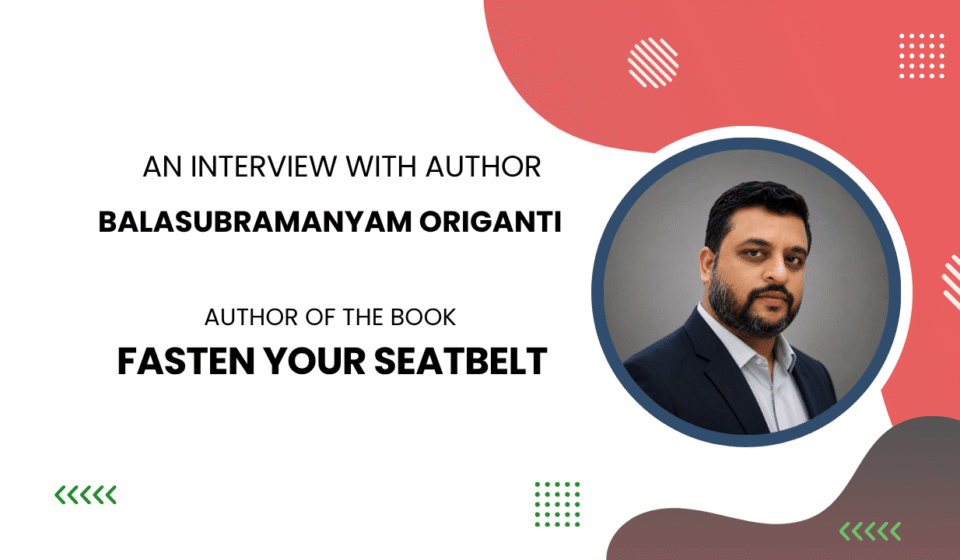

Balasubramanyam Origanti is a seasoned operations leader with over a decade of experience managing large-scale global teams across APAC, EMEA, India, and the UK. Currently based in Singapore, he serves as a Global Partner Operations Manager, overseeing outsourced vendor operations at scale, driving performance, efficiency, and workforce strategy across a 6,000+ strong workforce.
Prior to this, he spent several years at Amazon, where he led customer service operations for thousands of associates, honing his expertise in people leadership, process excellence, and operational scalability. Known for his pragmatic approach and people-first leadership style, Balasubramanyam has consistently delivered impactful business outcomes while building and mentoring high-performing teams.
Drawing from his extensive corporate journey, Fasten Your Seatbelt is his attempt to decode the realities of the modern workplace for young professionals. With a candid, experience-driven voice, he aims to bridge the gap between academic learning and corporate life—helping the next generation navigate their careers with clarity, confidence, and resilience.
1. What inspired you to write Fasten Your Seatbelt?
The inspiration came from observing a consistent pattern across fresh graduates entering the corporate world—they are highly educated, technically sound, and full of ambition, but often unprepared for the realities of workplace behavior, expectations, and ambiguity. Over two decades in leadership roles across large global teams, I repeatedly saw talented individuals struggle not because of lack of capability, but because they were never taught how organizations actually function. This gap between academic learning and corporate reality is what motivated me to write this book.
2. The book is aimed at fresh graduates entering corporate life. What gaps did you notice in traditional education that motivated you to create this guide?
Traditional education systems are excellent at building technical knowledge but often fall short in preparing students for real-world organizational dynamics. Skills such as stakeholder management, handling feedback, navigating office politics, managing emotions under pressure, or even basic workplace communication are rarely taught. As a result, many graduates experience a “reality shock” in their first job. This book is my attempt to bridge that transition gap.
3. You emphasize that workplace success is about more than technical skills. Which soft skill do you believe is most underrated among young professionals today?
Active listening. Most young professionals focus heavily on speaking, presenting, or demonstrating their knowledge. However, the ability to truly listen—understand context, interpret intent, and absorb feedback without defensiveness—is significantly underrated. Strong listeners make better decisions, build stronger relationships, and progress faster in their careers.
4. The book draws heavily from your real-world experiences. Was there a particular incident in your career that became the catalyst for writing this book?
There wasn’t a single incident, but rather a recurring pattern. Early in my leadership journey, I managed several high-performing individuals who consistently delivered results but struggled with collaboration, feedback, or adaptability. In some cases, these gaps limited their career
growth despite strong technical performance. Over time, I realized that success in the corporate world is not a function of individual brilliance alone, but of how well one integrates into a system. That realization became a major catalyst for the book.
5. You discuss concepts like emotional intelligence, growth mindset, and leadership. Which of these has had the greatest impact on your own professional journey?
Emotional intelligence has had the most profound impact on my journey. While skills and knowledge are important, the ability to understand people, manage emotions in high-pressure situations, and respond rather than react has been critical in leadership roles. Emotional intelligence has consistently helped me build trust, resolve conflicts, and lead large, diverse teams effectively.
6. Many young employees struggle with feedback and performance reviews. What advice would you give someone receiving critical feedback for the first time?
The most important shift is to separate identity from performance. Feedback is not a judgment of who you are—it is input on what you did in a specific context. The best approach is to listen without interruption, ask clarifying questions, and avoid immediate justification. Later, reflect objectively on the feedback and identify patterns. If taken in the right spirit, feedback becomes one of the most powerful tools for growth.
7. The corporate world is often portrayed as highly competitive. How can professionals balance ambition with collaboration?
True career growth in modern organizations is not a zero-sum game. While ambition drives personal progress, collaboration drives organizational success—and the two are not mutually exclusive. The key is to focus on creating value beyond your immediate role, sharing credit generously, and building strong relationships across teams. Ironically, those who collaborate effectively often become the most trusted and fastest-growing individuals in competitive environments.
8. In your view, what are the biggest mistakes fresh graduates make during their first year in a corporate environment?
The most common mistakes include expecting immediate recognition, underestimating the importance of communication, and resisting feedback. Many also assume that technical excellence alone will ensure growth. In reality, the first year is less about proving expertise and more about learning how to operate within an organization—understanding culture, expectations, and interpersonal dynamics.
9. The workplace is changing rapidly due to AI, automation, and hybrid work models. What skills will be most valuable for the next generation of professionals?
The future will belong to those who combine adaptability with strong human skills. Critical thinking, problem-solving in ambiguous environments, emotional intelligence, and the ability to collaborate across virtual and global teams will be essential. As AI takes over routine tasks, human judgment, creativity, and interpersonal effectiveness will become the real differentiators.
10. If readers could take away just one lesson from Fasten Your Seatbelt, what would you want that lesson to be?
That success in the corporate world is not just about what you know, but how you show up every day. Your attitude, adaptability, and ability to work with people will often matter more than your technical expertise. If you can stay curious, humble, and open to learning, the corporate journey becomes not just successful—but also meaningful.
Book Title: Fasten Your Seatbelt
Author: Balasubramanyam Origanti
Publisher: Evincepub Publishing